
As we bid farewell to 2023 and look towards the horizon of 2024, it’s imperative to reflect on the transformative journey we’ve embarked upon, particularly in the realm of Artificial Intelligence (AI), and to anticipate the unfolding possibilities and challenges that lie ahead.

A Retrospective on 2023: The AI Ascendancy
2023 will be remembered as the year AI firmly established itself as a cornerstone of technological advancement. ChatGPT’s global popularity is a testament to this, marking a significant leap in how we interact with technology. Microsoft’s introduction of Copilot and Google’s foray into AI further intensified the race, pushing the boundaries of innovation. These developments weren’t isolated; they signalled a broader trend of AI integration across various sectors, reshaping the landscape of digital interaction.
Beyond AI: Other Key Trends of 2023
While AI was a dominant force, 2023 also witnessed other significant trends. The integration of AI into business models and educational institutions revolutionized access to information and learning paradigms. AI’s role in enhancing assistive technology, accelerating application development, and empowering non-technical users cannot be overstated. McKinsey’s projection of AI contributing up to $4.4 trillion in economic value underscores its transformative impact.
2024: The AI Integration Challenge
The coming year, 2024, presents a unique set of challenges and opportunities. Organizations will grapple with incorporating AI into their systems and user experiences. This necessitates a reevaluation of IT and data infrastructures to meet the growing demand for faster, more personalized customer interactions. A McKinsey report on digital trends highlights the urgency of this transformation.
Talent Gap: A Pressing Concern
A critical challenge for 2024 is the disparity between the burgeoning demand for AI and the availability of skilled professionals. This gap is particularly pronounced in countries like Switzerland, with traditionally low unemployment rates. Companies must not only attract but retain talent by offering engaging projects and embracing innovation. The demographic shift towards lower birth rates, especially in Western countries, compounds this challenge, leading to a scarcity of working-age adults. This trend could escalate production costs as organizations compete for a limited pool of highly skilled workers.
Emerging Trends to Watch
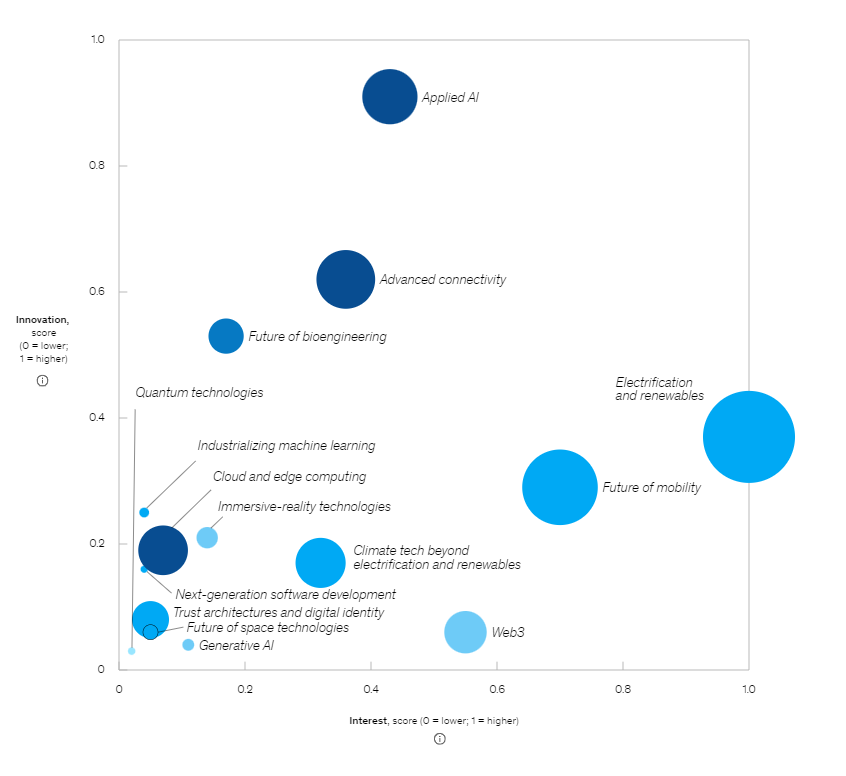
As we navigate through 2024, several emerging trends warrant close attention:
- Future of Mobility and Renewable Energy: The ongoing energy revolution and advancements in mobility solutions will significantly shape our environmental and transportation futures.
- The Growing Importance of Cloud Computing: Cloud technologies will become increasingly vital in our digital ecosystem.
- Quantum Technologies: The burgeoning field of quantum computing is set to unlock new possibilities in computing power and problem-solving.
- Web3 and Advanced Connectivity: While Web3 may not bring immediate disruptions, its long-term potential, coupled with advancements in connectivity, particularly in healthcare, is immense.
Embracing Change and Preparing for the Future
The transformations and challenges of 2024 offer both opportunities and obstacles. Businesses and individuals alike should invest time in understanding these trends and their potential impacts. But don’t be overwhelmed, take the time to learn about what’s coming and how it could affect your company or your industry. More often than not, organizations are still struggling to introduce concepts and technologies that are decades old. But don’t lose sight of these trends. You never know what could be useful or be the next revolution you won’t want to miss.


 A different view by Jaime Porta
Leave a reply to Growth Strategy in a Direct Sales Business: Riding the Digital Wave – A different view by Jaime Porta Cancel reply